


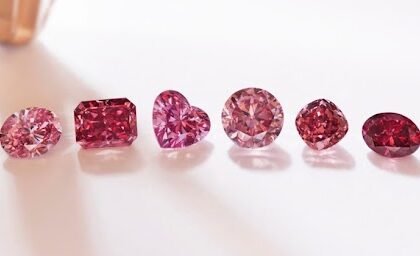
Colour has always existed in fine jewellery, but for much of its history it played a supporting role. Diamonds were judged primarily by clarity and brilliance. Colour was something to minimise, control, or explain away. When colour did take centre stage, it was usually through gemstones whose value was already culturally understood. What changed over the past few decades was not taste alone, but perception. Colour stopped being decorative and started becoming directional.
High jewellery houses were among the first to feel this change. Design teams noticed that collectors lingered longer over coloured pieces. Conversations became more technical. Buyers asked not just about shade, but about saturation, undertone, and origin. Colour language entered the mainstream of fine jewellery in a way it never had before. This was not trend-driven behaviour. It was curiosity turning into expertise.
One of the most significant impacts of this colour obsession was how it reshaped design priorities. Previously, complex settings and intricate metalwork were used to elevate stones. As colour became the focal point, settings softened. Lines simplified. Designers wanted the hue to speak without interruption. White metals dominated, not for fashion reasons, but because they allowed colour to remain unchallenged.
This shift also affected scale. Coloured stones did not need to be large to be powerful. Even small pieces carried weight if the colour was distinctive enough. Designers began working with proportion differently, placing emphasis on placement rather than size. Earrings, rings, and pendants became studies in balance rather than spectacle.
Collectors played a critical role in reinforcing this direction. Many were no longer interested in seasonal relevance. They wanted pieces that would hold meaning regardless of changing tastes. Colour offered that stability. A rare hue does not age in the same way a design trend does. It either exists or it does not. That binary quality appealed strongly to buyers thinking long term.
As demand grew, education followed. Auction houses, gem laboratories, and jewellers invested heavily in explaining colour. Grading systems became more nuanced. Terminology expanded. Buyers learned to differentiate between subtle variations that once would have gone unnoticed. This deeper understanding made colour feel less subjective and more authoritative.
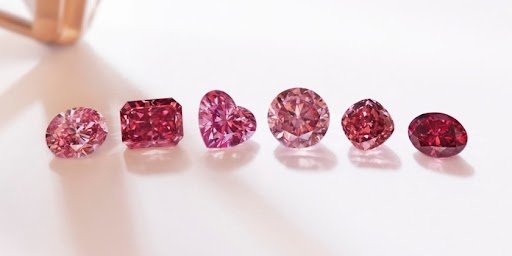
Within this context, Argyle Pink Diamonds entered the conversation not simply as objects of desire, but as a benchmark. They became shorthand for how a single colour, tied to a specific origin, could alter global design behaviour. Even designers who never worked directly with them felt their influence. They demonstrated that colour could carry narrative, not just visual appeal.
The obsession also affected how collections were presented. Instead of grouping pieces by theme or technique, houses began grouping by colour stories. Entire collections revolved around subtle tonal ranges. This approach mirrored how collectors were thinking. They were building narratives, not sets.
Importantly, colour’s rise forced the industry to confront limits. Unlike colour-enhanced stones, natural hues cannot be scaled through demand. There is no way to increase production once supply ends. This reality introduced a new seriousness to design decisions. Colour could not be treated casually. Every use felt consequential.
Marketing adapted accordingly. Language became quieter and more precise. Instead of dramatic claims, houses focused on facts. Where did the colour come from. How was it formed. Why would it never appear again in the same way. This informational approach resonated with buyers who valued knowledge as much as ownership.
Today, the influence of this colour obsession is everywhere in fine jewellery. Even pieces without coloured stones borrow from the restraint and clarity it introduced. Design has become more intentional. Excess has given way to focus.
Argyle Pink Diamonds remain part of this story because they exemplify how colour, when combined with provenance and finality, can reshape an entire industry. Their legacy is not confined to the pieces themselves, but lives on in how designers think, how collectors choose, and how value is defined.
When colour stops being optional, design stops being casual. Fine jewellery learned that lesson quietly, one hue at a time.